


Thoughts on Electric AV's?

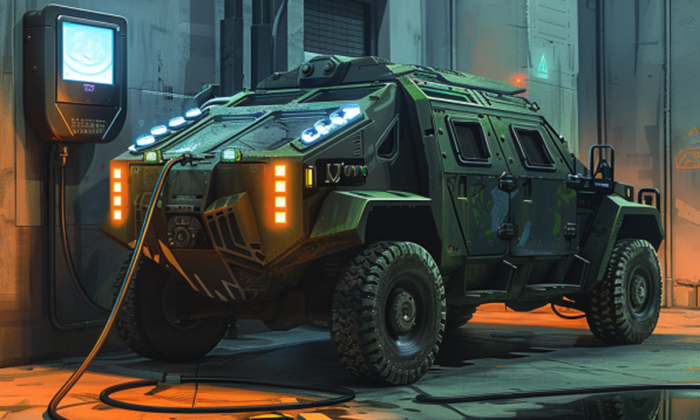
The advent of electric vehicles (EVs) has significantly impacted various sectors, including personal transportation and commercial logistics. With the growing emphasis on reducing carbon footprints and enhancing energy efficiency, the question arises: Are electric armoured vehicles (EAVs) suitable for military and security applications? Let's delve into the technical aspects and evaluate their suitability.
Technical Details of Electric Armoured Vehicles
1. Powertrain and Performance: Electric armoured vehicles are equipped with electric motors powered by rechargeable batteries. These batteries can be either lithium-ion or solid-state, providing significant torque and enabling quick acceleration. Electric motors are inherently more efficient than internal combustion engines, translating to less wasted energy and potentially more range per charge.
2. Energy Storage and Range: One of the primary concerns with EAVs is their energy storage capacity. While advances in battery technology have led to higher energy densities, the weight of the armoured vehicle itself poses a challenge. Armoured vehicles require robust batteries capable of supporting their heavy frames and the additional power needed for electronic systems and armaments. Current battery technology may not offer sufficient range for extended missions without frequent recharging, which can be impractical in combat situations.
3. Durability and Reliability: Electric vehicles are known for having fewer moving parts, which theoretically reduces maintenance needs and improves reliability. However, the rugged environments in which armoured vehicles operate require components that can withstand extreme conditions, such as high temperatures, rough terrains, and electromagnetic interference. Ensuring that electric components meet these stringent durability standards is critical but remains a challenge.
4. Silent Operation and Heat Signature: One of the notable advantages of EAVs is their silent operation, which can be crucial for stealth missions. Electric motors generate less noise compared to diesel engines, potentially giving military forces a tactical advantage. Additionally, EAVs produce lower heat signatures, making them harder to detect with infrared sensors.
5. Charging Infrastructure and Logistics: A significant limitation of EAVs is the requirement for a well-developed charging infrastructure. In conflict zones or remote areas, establishing and maintaining charging stations can be logistically challenging. Rapid charging technology is still in development, and current solutions might not be feasible for quick turnarounds in the field.
Evaluating Suitability: Neutral Perspective
While electric armoured vehicles present several promising features, such as enhanced torque, silent operation, and potentially lower maintenance, their current technological limitations raise concerns about their suitability for widespread military and security use.
Range and Endurance: The limited range and need for frequent recharging pose significant drawbacks. In prolonged engagements or missions in remote areas, the lack of readily available charging infrastructure can severely hamper operational effectiveness.
Durability in Extreme Conditions: The durability and reliability of electric components in extreme combat conditions remain uncertain. While electric vehicles excel in civilian applications, the harsh environments faced by military vehicles require a level of robustness that current electric systems might not yet offer.
Logistical Challenges: Establishing a comprehensive charging network in conflict zones is a formidable challenge. Unlike civilian settings where charging stations can be planned and built in advance, military operations require flexible and rapid solutions that current electric technology may not support.
Conclusion
Electric armoured vehicles hold potential for future military applications, especially as battery technology and charging infrastructure evolve. However, given the current state of technology, they may not yet be fully suitable for all military and security scenarios. The range limitations, durability concerns, and logistical challenges are significant hurdles that need to be addressed before EAVs can become a viable option for widespread deployment.
The path forward involves continued research and development to enhance battery capacities, improve the durability of electric systems under extreme conditions, and establish more efficient and rapid charging solutions. Until then, traditional combustion engine armoured vehicles may remain the more practical choice for most military applications.
Sources:
Defstrat: Future trends in vehicle armouring (Defstrat)
European Security & Defence: NP Aerospace builds portfolio with assets of Jankel Armouring Ltd (News - European Security & Defence)
Army Technology: MKU to Focus on Vehicle Armouring Programs in US (Army Technology)